
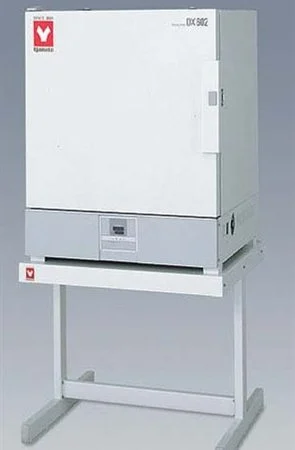
When your laboratory work requires consistent heating without excessive air movement, choosing the right oven can make a meaningful difference. A gravity convection oven uses natural air circulation to distribute heat throughout its chamber, making it suitable for applications where gentle heating and reduced airflow disturbance are important. By understanding how this equipment works, you can select an oven that supports your sample requirements, improves workflow efficiency, and helps maintain reliable laboratory processes.
Understand How a Gravity Convection Oven Works
A gravity convection oven relies on the natural movement of heated air rather than a mechanical fan. As air warms, it becomes less dense and rises. Cooler air moves downward to replace it, creating a continuous circulation pattern within the chamber.
This process allows heat to move around samples without the forced airflow generated by fan-assisted ovens. For materials that may be disturbed by strong air currents, this can be a practical advantage.
You can consider a gravity convection oven for applications such as:
- Drying glassware and selected laboratory utensils.
- Heating samples that tolerate natural convection.
- Conditioning materials under controlled temperature conditions.
- Performing routine drying and warming procedures.
- Supporting laboratory preparation and general-purpose heating tasks.
However, natural circulation can produce slower heating and greater temperature variation than forced convection in some operating conditions. You should evaluate the oven’s temperature uniformity specifications before using it for sensitive procedures.
Discover the Benefits of Gentle Sample Heating
Gentle heating is important when you need to control how thermal energy reaches your materials. Strong air currents can disturb lightweight items, redistribute loose powders, or affect exposed materials during certain procedures.
A gravity convection oven reduces this source of disturbance by allowing air to circulate naturally. This makes it worth considering when your samples do not require rapid heat transfer or aggressive air movement.
Key benefits include:
Reduced airflow disturbance: Natural convection avoids fan-driven air currents that may interfere with lightweight or easily displaced materials.
Straightforward operation: Without a circulation fan, the equipment has fewer moving components associated with air distribution.
Suitable for routine laboratory tasks: You can use these ovens for compatible drying, warming, and conditioning applications.
Flexible sample handling: Depending on chamber capacity and temperature specifications, you can accommodate different containers, glassware, and materials.
Remember that gentle airflow does not automatically mean gentle treatment for every sample. Temperature, exposure time, material composition, and moisture content all influence the outcome. Always confirm that your intended application is compatible with the oven’s operating range.
Evaluate the Features That Matter Most
Before purchasing laboratory heating equipment, compare its specifications with your actual workflow. The right choice depends on sample characteristics, required temperatures, chamber capacity, and the consistency your procedure demands.
Temperature range and control
Identify the minimum and maximum temperatures required for your application. Look for a controller that allows you to set and monitor the temperature accurately. If your procedure requires tight temperature tolerances, review the manufacturer’s stated control accuracy and performance data.
Temperature uniformity
Natural convection depends on temperature differences and airflow paths inside the chamber. Sample placement, shelf loading, and chamber geometry can influence heating consistency.
Ask whether the oven has documented temperature-uniformity data and whether mapping is available for your intended operating conditions.
Chamber capacity
Estimate the space needed for your usual workload, including containers, trays, and clearance between samples. Avoid selecting an oven based only on its external dimensions. Adequate internal space supports better loading practices and helps prevent blocked circulation paths.
Construction and safety
Review chamber materials, shelf configuration, insulation, overtemperature protection, and any relevant electrical safety features. Ensure that the equipment is suitable for your laboratory environment and the materials you plan to heat.
For a practical comparison of available equipment, explore gravity convection ovens for gentle laboratory sample heating and controlled drying applications.
Apply Best Practices for Consistent Heating
Even a well-designed oven depends on correct operating procedures. Follow these practices to improve repeatability and protect your samples.
Preheat the chamber: Allow the oven to reach its target temperature before loading samples when your procedure requires preheating.
Arrange samples carefully: Leave sufficient space between containers and avoid blocking natural air circulation.
Use compatible containers: Confirm that sample holders, glassware, and trays can withstand the selected temperature.
Monitor heating time: Establish appropriate exposure periods for each material instead of assuming that every sample requires the same duration.
Verify performance: Use calibrated temperature-measuring equipment and conduct temperature mapping when required by your quality system.
Maintain a cleaning schedule: Remove residues using approved methods and inspect shelves, seals, and chamber surfaces regularly.
Document results: Record operating conditions, sample placement, and relevant observations to help identify variations between runs.
Never use a general-purpose laboratory oven for volatile solvents, flammable atmospheres, or hazardous materials unless the equipment is specifically designed and approved for that application. Follow the manufacturer’s instructions and your laboratory’s safety procedures.
Decide Whether Gravity Convection Fits Your Workflow
A gravity convection oven is a strong candidate when your primary requirements include natural air circulation, reduced airflow disturbance, and routine heating at controlled temperatures.
However, it may not be the best option for every process. Forced convection may be preferable when faster heat transfer, improved circulation, or more uniform heating under specific loading conditions is required. Highly temperature-sensitive work may also demand specialized equipment and validated operating procedures.
To make an informed decision, compare your process requirements against the oven’s temperature range, chamber capacity, uniformity data, safety features, and maintenance needs. Consider the total workload rather than focusing on purchase price alone.
At Global Lab Supply, a supplier of laboratory equipment and scientific products, you can review equipment options for your laboratory needs.
If you need help determining which model suits your application, contact the laboratory equipment team for gravity convection oven selection assistance.
Frequently Asked Questions
1. What is a gravity convection oven used for?
A gravity convection oven is commonly used for routine laboratory drying, warming, conditioning, and other compatible heating tasks that benefit from natural air circulation rather than fan-driven airflow.
2. How does a gravity convection oven differ from a forced convection oven?
A gravity convection oven circulates heated air naturally, while a forced convection oven uses a fan. Forced airflow can improve heat transfer and circulation, whereas natural convection reduces fan-generated air movement.
3. Is a gravity convection oven suitable for heat-sensitive samples?
It may be suitable for samples that tolerate the oven’s operating temperature and heating duration. You should verify the material’s thermal stability and confirm that the oven provides the required temperature control and uniformity.
4. Does a gravity convection oven provide uniform heating?
It can provide effective heating for suitable applications, but temperature uniformity depends on chamber design, loading, temperature settings, and natural airflow. Check the manufacturer’s specifications and validate performance when necessary.
5. What should you consider before buying a gravity convection oven?
Compare temperature range, control accuracy, temperature uniformity, chamber capacity, construction, safety features, maintenance requirements, and compatibility with your intended materials.
Conclusion
Choosing a gravity convection oven can help you achieve practical, controlled heating when natural air circulation and reduced airflow disturbance suit your laboratory process. By assessing temperature performance, chamber capacity, sample compatibility, and safety requirements, you can select equipment that supports consistent results and efficient daily operations. Match the oven to your actual application, follow validated procedures, and verify performance whenever your work demands dependable temperature control.