
Installing a laboratory fume hood is not simply a matter of selecting a suitable enclosure and connecting it to a ventilation line. Your existing exhaust infrastructure must support the hood’s airflow requirements, handle the chemicals involved, and maintain safe operating conditions throughout the workday. A mismatch can lead to inadequate contaminant capture, unstable airflow, excessive energy consumption, or costly modifications.
To make the right choice, evaluate your current ventilation system before purchasing equipment. By checking exhaust capacity, duct materials, fan performance, and building constraints, you can select a hood that integrates with your laboratory more reliably.
Assess Your Existing Exhaust System
Start by documenting your laboratory’s current exhaust configuration. Identify the exhaust fan, duct routing, connection points, discharge location, and any other equipment connected to the same system.
Determine whether your exhaust system serves a single hood or multiple laboratory workstations. Shared systems require particular attention because changes in one branch can affect airflow in others.
Ask your facilities or ventilation team to verify:
- Existing exhaust airflow and available capacity.
- Duct diameter, material, condition, and routing.
- Fan performance under actual operating conditions.
- Static pressure losses across ducts, fittings, and filters.
- Existing controls, alarms, and airflow monitoring devices.
Do not rely on duct diameter or fan nameplate ratings alone. Actual performance depends on the complete system and its operating resistance.
Calculate the Hood’s Airflow Requirements
The next step is to establish the airflow required by your proposed hood. This depends on the hood’s design, opening dimensions, intended sash position, laboratory activities, and applicable safety standards.
For a preliminary estimate, airflow can be calculated using:
Airflow = Face velocity × Open sash area
For example, a hood opening of 0.8 m² operating at a face velocity of 0.5 m/s would require approximately 0.4 m³/s, or 1,440 m³/h, under the simplified calculation. This is an illustrative estimate, not a universal design specification or confirmation of safe performance.
Your final requirements should come from the hood manufacturer’s specifications, a qualified ventilation engineer, and applicable standards. Also consider whether the hood will operate continuously, use a variable-air-volume system, or share an exhaust fan with other equipment.
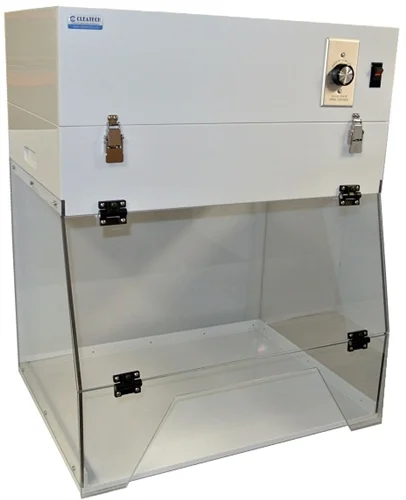
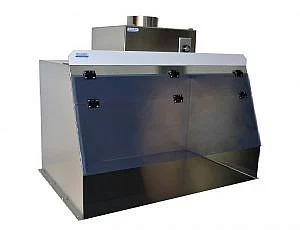
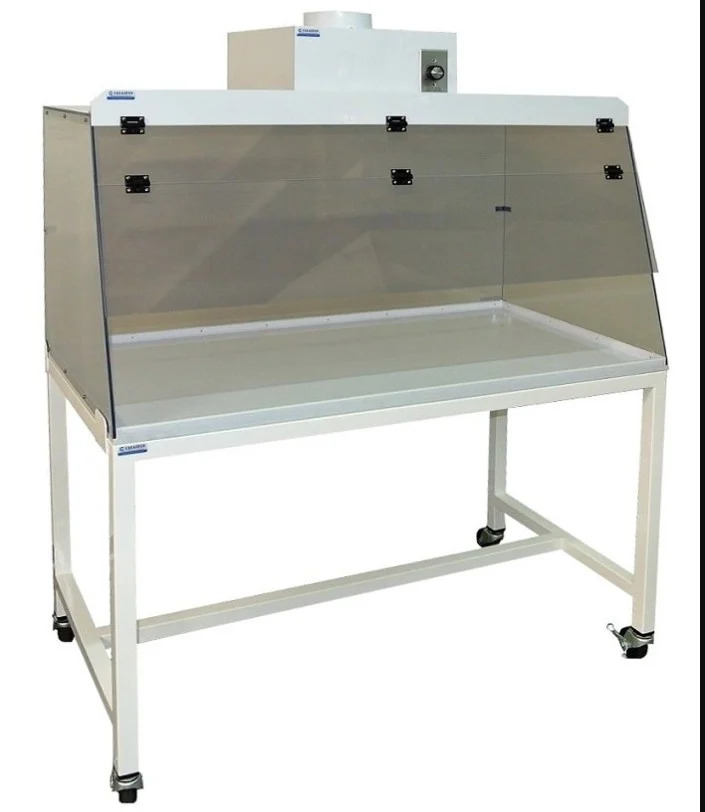
When evaluating a ducted laboratory fume hood for an existing exhaust system, confirm that the available airflow meets the hood’s specified operating requirements without compromising connected equipment.
Verify Duct Material and Chemical Compatibility
Your exhaust ductwork must withstand the chemicals, vapors, temperature conditions, and moisture expected during laboratory operations.
For example, corrosive vapors may require materials different from those suitable for general solvent handling. Some processes also generate condensable vapors or reactive by-products that can affect duct integrity.
Review the following factors:
Chemical resistance: Confirm compatibility with the full range of expected contaminants.
Temperature tolerance: Check whether exhaust temperatures exceed material limits.
Corrosion resistance: Inspect existing ducts, joints, and supports for deterioration.
Leak prevention: Evaluate connections and access panels for appropriate containment.
Maintenance access: Ensure that inspection and cleaning remain practical.
Avoid assuming that an existing duct is suitable simply because it currently serves another laboratory device. Chemical compatibility must be evaluated against your specific application.
Check Exhaust Fan Capacity and Static Pressure
Even when your existing fan appears powerful enough, the system may not deliver the required airflow after the new hood is connected.
Every duct, elbow, transition, damper, and exhaust outlet contributes resistance. Adding a hood can increase the total pressure requirement and reduce airflow elsewhere in a shared system.
Ask a qualified HVAC or laboratory ventilation engineer to assess the fan curve, system resistance, available pressure margin, and expected operating point.
Depending on the findings, you may need duct modifications, fan adjustments, a dedicated exhaust fan, or a redesigned balancing strategy.
Avoid simply increasing fan speed without engineering review. Excessive exhaust can create room-pressure problems, increase energy use, and interfere with other ventilation systems.
Evaluate Controls, Airflow Monitoring, and Room Balance
A compatible connection must do more than move air. Your hood should operate predictably when nearby equipment starts, doors open, or other exhaust branches change their demand.
Review whether your existing system supports the proposed hood’s control requirements, including:
- Sash-position or airflow-responsive controls, where applicable.
- Airflow alarms and clear user notifications.
- Coordination with building automation systems.
- Appropriate laboratory pressure relationships.
- Commissioning and periodic performance verification.
After installation, qualified personnel should test the hood under representative operating conditions. Verify airflow, containment performance, alarms, and interactions with connected systems. Use applicable standards and manufacturer procedures to determine acceptance criteria.
Plan the Physical Installation Before Ordering
Check the proposed hood’s overall dimensions, connection location, service clearances, electrical requirements, and route from delivery access to the installation area.
Existing duct connections may not align with the selected model. Ceiling obstructions, structural beams, utilities, and limited service access can also affect installation cost and scheduling.
Prepare a site checklist covering the hood dimensions, exhaust collar size, duct route, required clearances, fan and control arrangements, and installation responsibilities. Resolve uncertainties before finalizing the purchase.
Select a Hood That Fits Your Laboratory’s Needs
Your selection should reflect both the exhaust infrastructure and the work you perform. Consider the chemicals used, expected vapor generation, operating hours, hood size, and anticipated changes in laboratory processes.
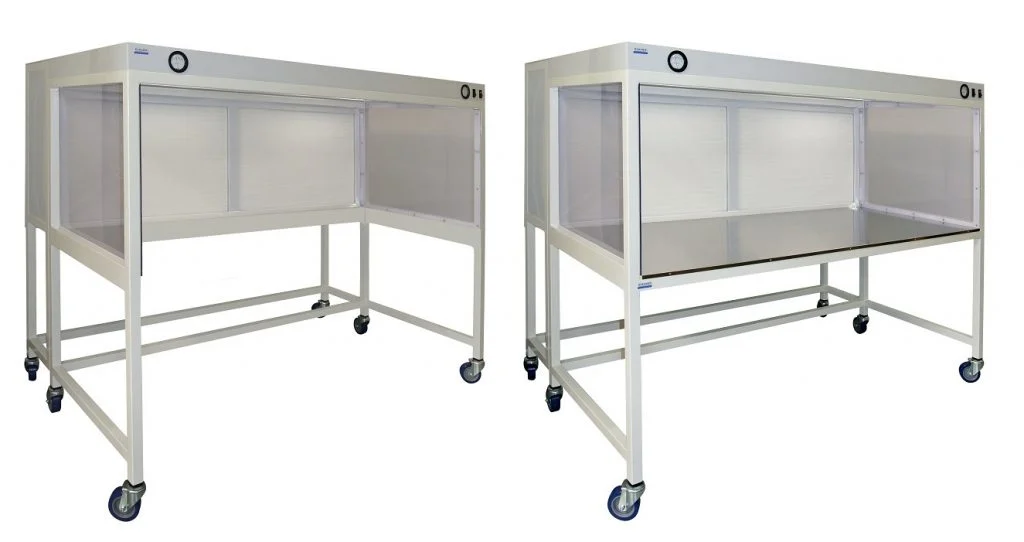
Explore ducted fume hoods for laboratory chemical vapor control to review equipment options and identify a configuration that may suit your application.
At CleaTech LLC laboratory and cleanroom equipment solutions, you can explore laboratory equipment options and discuss your application requirements. Share your exhaust specifications, intended chemical use, available space, and project constraints when requesting assistance.
Confirm Your Fume Hood Requirements
Before committing to a model, gather your ventilation assessment and equipment specifications. Contact us today to discuss your laboratory equipment needs and determine what information is required to evaluate a suitable configuration.
Conclusion
Matching a ducted fume hood to existing exhaust infrastructure requires a coordinated review of airflow, duct compatibility, fan capacity, controls, and installation conditions. Treat the hood and exhaust network as one integrated system rather than separate pieces of equipment.
By verifying requirements before purchase and arranging professional commissioning after installation, you can reduce unexpected modifications, support reliable contaminant control, and make better use of your laboratory’s existing ventilation resources.
Frequently Asked Questions
1. How do you determine whether an existing exhaust system can support a ducted fume hood?
Have a qualified ventilation engineer assess available airflow, fan performance, static pressure, duct resistance, and the demands of connected equipment. Confirm that the system can meet the proposed hood’s specifications under actual operating conditions.
2. Can you connect a new fume hood to an existing exhaust duct?
Yes, if the ductwork, fan capacity, chemical compatibility, and control arrangements are suitable. A professional assessment is necessary to determine whether the existing system can accommodate the additional load safely.
3. What airflow is required for a ducted fume hood?
Airflow requirements depend on the hood design, opening dimensions, intended use, and applicable standards. Use manufacturer specifications and a qualified engineering assessment rather than applying one universal airflow value to every hood.
4. Does duct material affect fume hood selection?
Yes. The duct material must resist the chemicals, temperatures, and moisture present in the exhaust stream. Selecting incompatible materials can cause corrosion, leakage, premature failure, or maintenance problems.
5. What should you check after installing a ducted fume hood?
Verify airflow, containment performance, alarm operation, control response, and interactions with the building ventilation system. Qualified personnel should document commissioning results and confirm that the installation meets applicable requirements.