

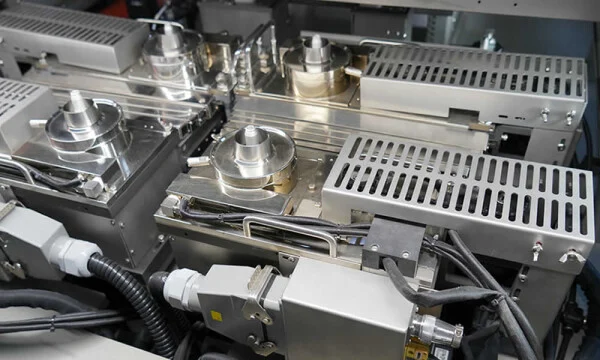
In the relentless pursuit of technological advancement, particularly in electronics manufacturing, precision and efficiency govern the production lines. Among the stars of innovative manufacturing solutions, selective soldering machines have emerged as pivotal in enhancing production capabilities. These machines, known for their meticulous accuracy and reliability, have become essential tools in the fabrication of electronic components.
Selective soldering machines revolutionize circuit board assembly by allowing selective soldering of specific components on printed circuit boards (PCBs). This targeted approach prevents damage to heat-sensitive components, thereby ensuring higher quality products with reduced defects. Among the various types of these machines, the automated selective soldering machine stands out by minimizing human error and consistently replicating precise soldering processes, enhancing throughput and efficiency.
The selective wave soldering machine brings another layer of precision by merging the best of wave soldering techniques with the control of selective soldering. This machine is instrumental for manufacturers that deal with dense electronic assemblies requiring high precision, particularly in sectors like automotive and aerospace. Its capability to solder precisely without compromise on adjacent components makes it invaluable.
Moreover, manufacturers aiming for cost-effectiveness without sacrificing quality are turning towards the economical selective wave soldering machine. This version provides the essential functions needed for selective soldering without the extra cost associated with more advanced models, making it an excellent choice for smaller operations or those just beginning to automate their soldering processes.
As for companies needing high volume production, the inline selective wave soldering machine offers seamless integration into existing production lines. This machine’s ability to keep pace with continuous manufacturing processes helps maintain a balance between speed and precision, crucial for large-scale production environments.
Selective soldering machines are not just equipment; they are crucial investments that adapt to various industrial needs. In the automotive sector, for instance, these machines are employed to assemble complex electronic control units (ECUs) and advanced driver-assistance systems (ADAS) modules with unyielding precision. The aerospace industry, known for its stringent quality standards, relies on these machines for assembling avionics boards that demand flawless soldering to ensure functionality and safety.
Furthermore, selective soldering technologies are making significant inroads into the realms of new energy and consumer electronics. In new energy applications, such as electric vehicle (EV) battery management systems (BMS) and power electronics, these machines contribute to the innovation and efficiency required to keep pace with evolving technologies. Even in consumer electronics, where production demands flexibility due to a high mix of products, selective soldering machines ensure consistent quality and adaptability.
Given the complexities of modern PCB assemblies, the relevance of using a CE and ISO certified selective soldering machine becomes increasingly apparent. These certifications mean that the machines meet high safety, health, and environmental protection standards, which is critical in maintaining trust and reliability across industries.
For further reading on selective soldering and its applications, consider visiting https://en.wikipedia.org/wiki/Selective_soldering.
The rise of selective soldering machines in electronics fabrication marks a significant leap towards future-proof manufacturing processes. As industries continue to evolve, the demands for precision, efficiency, and quality will perpetually increase. In this landscape, having a selective soldering machine isn’t just an advantage; it’s a fundamental component of modern electronics manufacturing.