

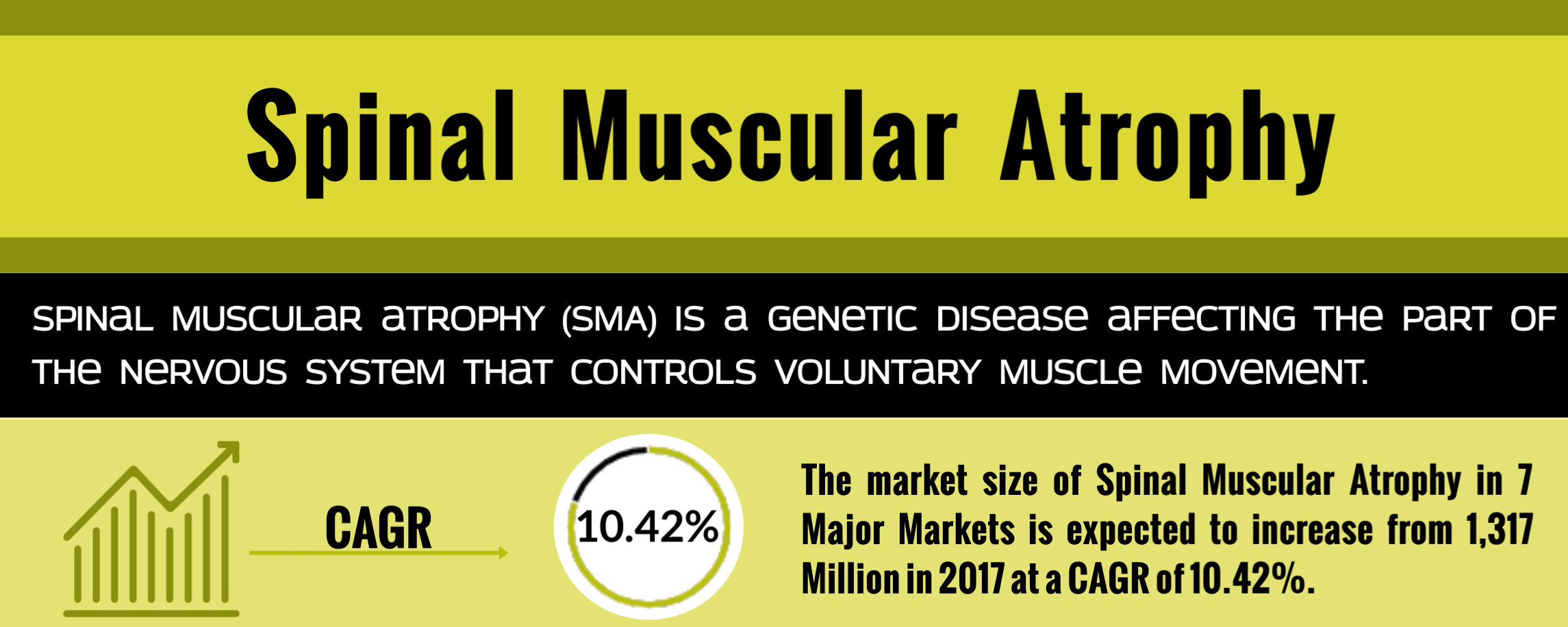
Delveinsight’s Spinal Muscular Atrophy Market Insights, Epidemiology and Market Forecast-2028 report offers an in-depth understanding of the indication, historical & forecasted epidemiology as well as the market trends of Spinal Muscular Atrophy in the United States, EU5 (France, Germany, Italy, Spain and the United Kingdom) and Japan. The Report covers current treatment practice/algorithm, market drivers, market barriers and unmet medical needs to find the best of the opportunities and assess the underlying potential of the market.
Spinal Muscular Atrophy (SMA) is a rare genetic disorder that affects the part of the brain that controls the voluntary muscles. The loss of motor neurons in the spinal cord results in progressive skeletal muscle wasting and often death. The muscles stop receiving the signals from the Brain. This is why it is often referred to as motor neuron disease. SMA often steals the physical strength of those suffering with it. The weakness in the muscles closer to the centre of the body (proximal ones) are the ones that receive the most damage as compared to the distal ones. The cause of Spinal Muscular Atrophy is the mutations in the Chromosome5 of SMN1 gene which results in the deficiency of a motor neuron protein called SMN protein. Although, there present an extra copy of the SMN2 gene that is highly inefficient as compared to SMN1. The symptoms of SMA varies from mild to severe. As mentioned earlier, the weakness in the proximal muscles are such as those of the shoulders, hips, thighs and upper back is more prominent. The muscles used for breathing and swallowing if affected can result in abnormalities in these vital functions. If the muscles of the back weaken, it causes spinal curvatures.
The types of Spinal Muscular Atrophy usually vary because of the age of onset, and the severity of the physical weakness. SMA can be of four types ranging from SMA Type 0 to SMA Type 4, where the majority of the cases belong to Type1 followed by Type 2 and Type 3 SMA. The most severe one i.e., type 0 which affects the baby in the womb is a type of prenatal onset SMA. Type 1 Spinal Muscular Atrophy is mostly fatal by two years of age. Children suffering from Type 2 have limited walking and moving around. Patients with Type 3 gets affected in their teen years. Type 4 SMA begins in the adult age and does not affect the breathing and walking much.
Diagnosis of Spinal Muscular Atrophy includes blood tests, muscle biopsy, genetic tests, and potentially electromyography (EMG).