

How To Choose The Best IP Camera: IP Camera A Buying Guide
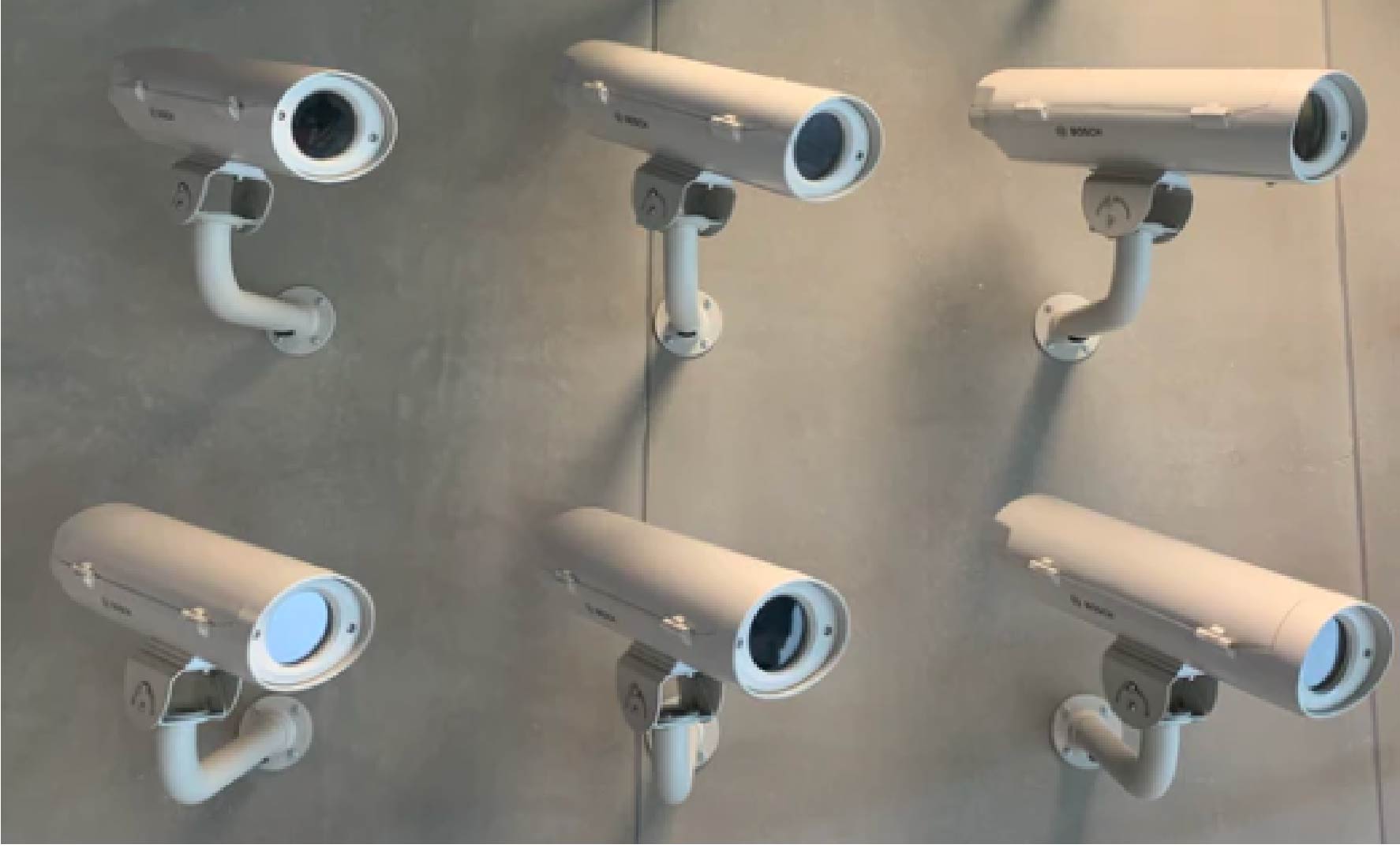
Are you longing for security cameras to ensure the protection of your residence, office, restaurant or do you just want your home to be safe? Have you just been born a baby and want to watch him without choking on his neck and not feeling his presence too much? All you need is one IP camera located in the environment, both indoors and outdoors, so everything that happens in the neighborhood is always under control. There are many different models of IP cameras, and on this page I will help you choose the right one for you.
l best IP camera They are versatile, stable and maximally protected from external attacks, but a model containing all these features can cost a lot, but solve their problems less versatile and more specific devices can be enough and much cheaper. There are IP cameras for outdoor use, others work with electricity, the third – only from batteries.
The latter can be more easily introduced into the environment than traditional models that need to be connected to electricity, however they have a much higher cost and require recharging the built–in batteries at regular intervals. IP cameras can also capture live video in the cloud or store them locally, and can only be activated when needed for better energy efficiency. In short, if you need the best IP camera for your needs, you are in the right place and I recommend you read all the following lines so as not to make a mistake in your purchase.
What is an IP camera?
To begin, I will explain what an IP camera is and why they are different from traditional cameras. For IP cameras, we mean a camera model to which you can connect to the Internet. As the name implies: unlike older cameras, which could only transmit video on a single LAN, an IP camera can send and receive PCs with data or remote PCs thanks to an Internet connection. The first models of the IP camera model, where IP means Internet Protocol, dates back to 1996, but in recent years it has become particularly common due to a significant drop in prices. Where IP means Internet Protocol, dates back to 1996, but in recent years it has become especially common due to a significant drop in prices.
An IP camera can be used primarily for video surveillance in rooms or homes, and is sometimes provided along with a number of additional services to get the most out of it. For example, some manufacturers offer cloud space online to store their videos and search for suspicious parts, others just use a memory card to store highlights. In some cases, they are also equipped with infrared LEDsrecord video.They can be used even at night or in low light. But there are also some drawbacks compared to CCTV cameras: if they are not installed properly, they can actually be less secure because they are prone to hacking by intruders and cybercriminals.
How to choose an IP camera
There are three main features of an IP camera. The first relates to specifications such as the sensor used, the type of lens and the size of the environment that can be covered by a simple shot; the second and third are related to compatible connections and active functions. If the technical characteristics of the camera quality can be established objectively, in the second case it is unclear that the presence of connection technology may be of interest to some users, but for others it may be completely useless.
Not all CCTV cameras about IP also know how to record audio, so it evaluates whether you need it for your needs or not. If you need it for the safety of the place, listening to what the attacker may say may not be helpful, on the other hand, if you want to control your child, any screaming and crying can grab your attention and inform him of any problems.
Specifications
These are the basic features that you should always keep in mind before buying an IP camera.
Image quality and format – Before you shop, carefully evaluate the quality of the pictures taken by the IP camera. As you can see, cameras with HD resolution (1280 × 720 pixels) They provide high clarity shooting, but if the ADSL speed is not the most exciting, it may be wiser to choose a low resolution IP camera (such as 640 × 480 pixels) , images that require less bandwidth remotely. The factor in which the pictures are taken also matters. IP cameras typically support H.264, MPEG4, MJPEG, and JPEG (photo) formats, which offer varying degrees of compression. Basically, the format that offers the best ratio between weight and file quality is H.264. Also take care of shooting frames per second (more in line with greater image smoothness) and optics cameras, which means, among other things, its ability to shoot images in low light. Remember that a smaller value corresponds to a larger aperture (f / 2 is greater than f / 2.8, so to speak).
Activity of The Sensors
Recording starts automatically on those cameras that are equipped with the function. surveillance zone user (via email) about what is happening. IP cameras are equipped with . They can detect penetration even in low light conditions.
Determine The Framework
When it comes to the ” the camera, should static IP (i.e. with a fixed frame), those robots that can be moved remotely, and those PTZ (tilt panel)) can instead be slightly moved horizontally and vertically or enlarge the frame. Alternatively there is a camera with a fish eye (fish eye) that provides a 360–degree view of the room in which they are located.
Check Audio Tools
As for the audio sector, it is advisable to choose cameras with two–way audio that allow you to listen to what is happening in the monitoring area, and at the same time communicate via the device via PC or mobile phone.
Features and connections.
Once you have chosen successfully the quality of your IP camera, you need to choose its position and destination to understand what type of model you need, whether you prefer wireless or wired and whether it can be easily installed with traditional devices. . are considered mainly those which are given below.
Can my Neighbour place CCTV at my house?
Placing CCTV cameras for the security of one’s assets is perfectly legal. But we have to keep in mind while placing CCTV cameras that the secrecy of the others is not hampered.
How far can a CCTV camera watch?
The usual capability of a home security to watch the object is up to 70 feet based on the resolution, sensor and lens. Besides, there are still some specialized cameras enriched with higher resolution that can monitor more than the mentioned distance.
Conclusion
In summarizing the whole article it is very obvious that the people all over the world have become dependent on CCTV cameras and almost everyone needs this device to protect the