

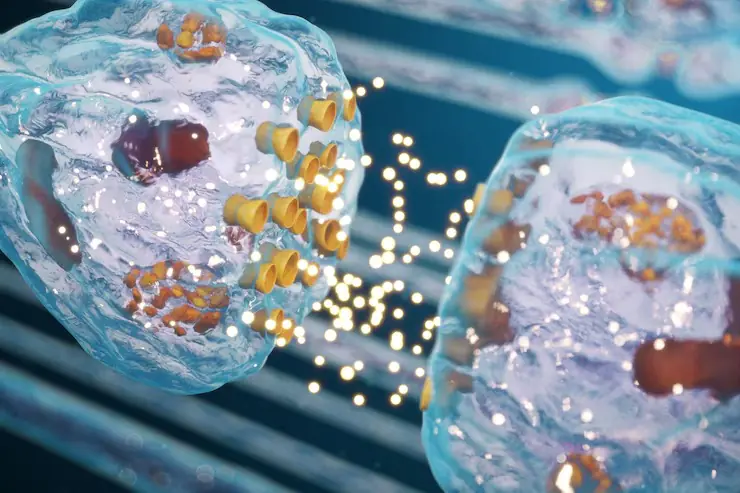
When you are working with antibodies, yield is not just a number on a datasheet. It determines whether your downstream assays succeed, whether your animal study stays on schedule, and whether your production workflow remains cost-effective. If you struggle with low recovery, inconsistent binding, or excessive sample loss during purification, you need a method that gives you both specificity and efficiency. That is where high-capacity Protein G Magnetic Beads for antibody purification make a measurable difference.
By integrating magnetic separation with high-affinity Fc binding, you can significantly increase antibody recovery while maintaining structural integrity. Here is how this approach works and why it improves your overall yield.
You Capture Antibodies with High Specificity
Protein G is a bacterial cell wall protein known for its strong affinity toward the Fc region of IgG antibodies across multiple species. When immobilized on magnetic beads, it creates a highly selective capture surface.
Instead of relying on traditional centrifugation-based resin columns that may result in flow-through losses, you use magnetic separation to retain nearly all bound antibodies in the reaction tube. This reduces mechanical loss and minimizes non-specific interactions.
If you are purifying IgG from serum, cell culture supernatant, or ascites fluid, this targeted interaction ensures that:
- Non-Ig proteins are efficiently washed away
- Binding efficiency remains consistent
- You retain more of your desired antibody fraction
The result is higher functional recovery in fewer steps.
You Reduce Sample Handling Loss
Every transfer step in a traditional column workflow increases the risk of sample loss. When you pipette, centrifuge, or transfer eluates between tubes, you inevitably leave trace amounts behind.
Magnetic bead systems simplify your workflow:
- Bind
- Wash
- Elute
All in a single tube.
When you place the tube on a magnetic rack, beads separate rapidly from the supernatant. There is no need for vacuum manifolds or repeated centrifugation cycles. Because you minimize manual handling, you preserve more antibody in each cycle. Over multiple batches, that difference becomes significant.
You Improve Binding Efficiency in Small Volumes
If you are working with limited samples—such as rare hybridoma cultures or precious clinical specimens—maximizing yield from small volumes is critical.
Magnetic beads provide:
- High surface-area-to-volume ratio
- Uniform suspension in solution
- Rapid binding kinetics
Since the beads remain evenly distributed during incubation, your antibodies have more opportunities to interact with Protein G ligands. In contrast, gravity-flow columns may suffer from uneven distribution or incomplete contact.
Using Protein G Magnetic Beads for high-yield IgG isolation, you can achieve efficient capture even when antibody concentration is low. This is especially beneficial for early-stage research or pilot-scale experiments.
You Preserve Antibody Activity
Yield is not only about quantity; it is also about functional quality. Harsh purification conditions can denature antibodies or reduce binding activity.
Magnetic bead purification allows you to:
- Use milder wash buffers
- Shorten processing time
- Reduce shear stress
Because the process is faster and gentler, antibodies maintain their conformational stability. That translates into higher activity in ELISA, Western blot, immunoprecipitation, or therapeutic development workflows.
When you partner with Lytic Solutions, LLC protein purification specialists, you gain access to optimized bead chemistries designed to maintain antibody integrity during isolation.
You Achieve Consistent Reproducibility
Reproducibility is essential if you scale from research to preclinical or production workflows. Magnetic separation provides uniform processing conditions across samples.
Unlike packed columns that may vary due to channeling or uneven resin compression, magnetic beads behave consistently in each batch. That consistency improves:
- Recovery percentage
- Purity profile
- Batch-to-batch reliability
When yield variability decreases, your downstream quantification becomes more accurate, and your production planning becomes more predictable.
You Save Time Without Sacrificing Recovery
Time efficiency directly impacts productivity. Traditional affinity chromatography may take hours, especially if multiple wash and equilibration steps are involved.
Magnetic bead workflows can be completed in under an hour depending on volume. Faster processing reduces:
- Protein degradation risk
- Protease exposure
- Experimental turnaround time
Because you shorten processing duration, you protect antibody stability and recover more usable product.
You Adapt Easily to Automation
If you plan to scale operations or integrate high-throughput workflows, magnetic beads offer compatibility with automated liquid handling systems.
Automation improves yield indirectly by:
- Reducing human error
- Standardizing incubation times
- Maintaining consistent wash cycles
In clinical research and biotech production environments, this consistency can significantly increase overall antibody recovery rates.
Practical Steps to Maximize Yield with Protein G Magnetic Beads
To ensure you get the highest possible antibody yield, follow these best practices:
Optimize Binding Conditions
Maintain neutral pH (7.0–8.0) during binding to maximize Fc interaction.
Use Proper Bead-to-Sample Ratio
Insufficient bead volume can lead to incomplete capture. Always calculate based on estimated IgG concentration.
Mix Gently but Thoroughly
Continuous gentle mixing during incubation ensures uniform exposure.
Avoid Overwashing
Excessive washing can cause minor dissociation. Use recommended buffer volumes.
Neutralize Eluate Immediately
If you use low-pH elution buffers, neutralize promptly to preserve antibody structure.
By implementing these steps with Protein G Magnetic Beads, you significantly improve both recovery rate and antibody quality.
Why Higher Yield Matters in Your Workflow
Higher antibody yield means:
- Reduced raw material cost
- Fewer repeat purifications
- Better experimental reliability
- Improved scalability
Whether you are conducting immunoprecipitation studies, monoclonal antibody development, or diagnostic kit production, maximizing recovery directly supports your scientific and commercial goals.
Magnetic bead technology allows you to combine precision, speed, and scalability in one platform.
FAQs About Protein G Magnetic Beads
How do Protein G Magnetic Beads increase antibody yield compared to columns?
They reduce sample loss by eliminating multiple transfer steps and provide better contact between antibody and ligand, improving binding efficiency.
Are Protein G Magnetic Beads suitable for all IgG subclasses?
Protein G binds strongly to most human, mouse, and rabbit IgG subclasses. However, binding affinity may vary, so confirm compatibility with your antibody subtype.
Can I reuse Protein G Magnetic Beads?
Some bead systems allow limited reuse if properly regenerated, but for critical experiments, single-use ensures consistent yield and purity.
Do magnetic beads affect antibody functionality?
No. When used with proper buffers and neutralization steps, antibodies maintain structural and functional integrity.
What sample types are compatible?
They are suitable for serum, plasma, ascites fluid, and cell culture supernatant.
Conclusion
By integrating magnetic affinity capture into your antibody purification workflow, you gain better control over recovery, consistency, and performance. When yield matters, Protein G magnetic separation offers a practical and scalable solution for modern antibody research and production.


