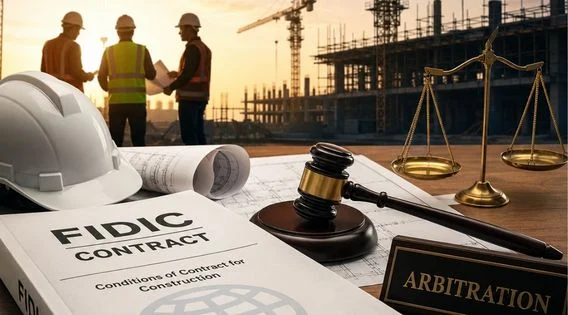

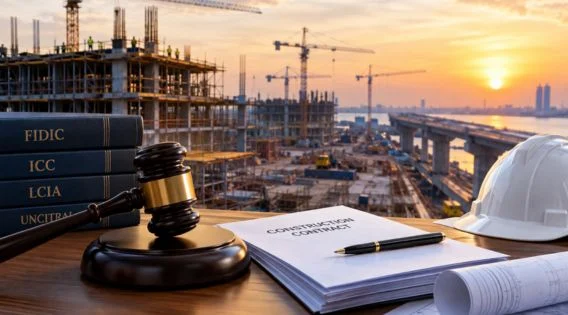
Few categories of arbitration test a tribunal quite like construction and infrastructure disputes. A single delayed steel delivery or a contested variation order can sit at the centre of hundreds of millions of dollars in exposure, and the record behind each claim is usually vast: programme logic networks, site diaries, and competing expert reports on causation and quantum. Parties in this position need a construction dispute arbitrator who understands how a live project behaves under pressure, and who can translate that understanding into a reasoned, enforceable award.
Where Construction Disputes Actually Arise
The disputes that end up before a tribunal rarely start as legal disagreements. They begin on site, as delay accumulates against a critical path, as ground conditions differ from what was foreseeable at tender, or as a performance test fails to meet the contractual benchmark. By the time the matter reaches arbitration, the questions have hardened into familiar but technical categories: entitlement to an extension of time under FIDIC, NEC, or a bespoke EPC form; the valuation of variations and change-in-law claims; the enforceability of a performance bond call; and the consequences of termination. A construction dispute arbitrator fluent in FIDIC Red, Yellow, and Silver Book mechanics, and in the multi-tier clauses that route a claim through a Dispute Adjudication Board before arbitration is even engaged, is better placed to manage that record than a generalist encountering it for the first time.
Infrastructure Adds a Sovereign Layer, and Joint Ventures Add a Structural One
Infrastructure projects introduce a complication that pure building contracts often avoid: a state or state-linked counterparty. Roads, ports, and power concessions are frequently procured or regulated by government entities, so a contractual delay claim can sit directly beneath a regulatory interference or expropriation argument. An infrastructure dispute arbitrator who has handled both the commercial claim and the public-law layer above it, rather than treating them as unrelated specialisms, is increasingly what parties look for when constituting a tribunal on a major concession dispute. Large projects also add a structural complication: they are rarely delivered by a single contractor, but through consortiums and joint ventures, where a delay claim must first be apportioned between partners before it can be advanced against the employer. A joint venture dispute arbitrator with genuine construction experience is well placed to disentangle what is owed between consortium partners from what is properly a claim against the employer.
Accepting Appointment as Sole Arbitrator or Tribunal Member
Construction and infrastructure disputes are heard both by a sole arbitrator, where parties value a single, focused decision-maker, and by a three-member tribunal, where scale or a multi-party structure calls for a panel. This practice is currently accepting appointments as sole arbitrator as well as a tribunal member in construction and infrastructure matters across building, energy, power, offshore, mining, and transport projects, under the rules of the ICC, LCIA, SIAC, HKIAC, DIAC, AAA-ICDR, and UNCITRAL and on an ad hoc basis, drawing on experience that includes a multi-billion-dollar ICC construction joint venture arbitration, EPC and FIDIC-governed energy infrastructure proceedings, and matters handled as an investment treaty dispute arbitrator concerning regulatory interference with infrastructure assets.
From the initial conflict check, through a procedural timetable tailored to delay and quantum expert evidence, to a reasoned and enforceable award under the New York Convention, the process is deliberately structured around the realities of a live project rather than abstract procedure. For parties, counsel, and institutions weighing an appointment, further detail on sector coverage and the appointment process is available on the website or by submitting a direct enquiry regarding a pending or anticipated dispute.